

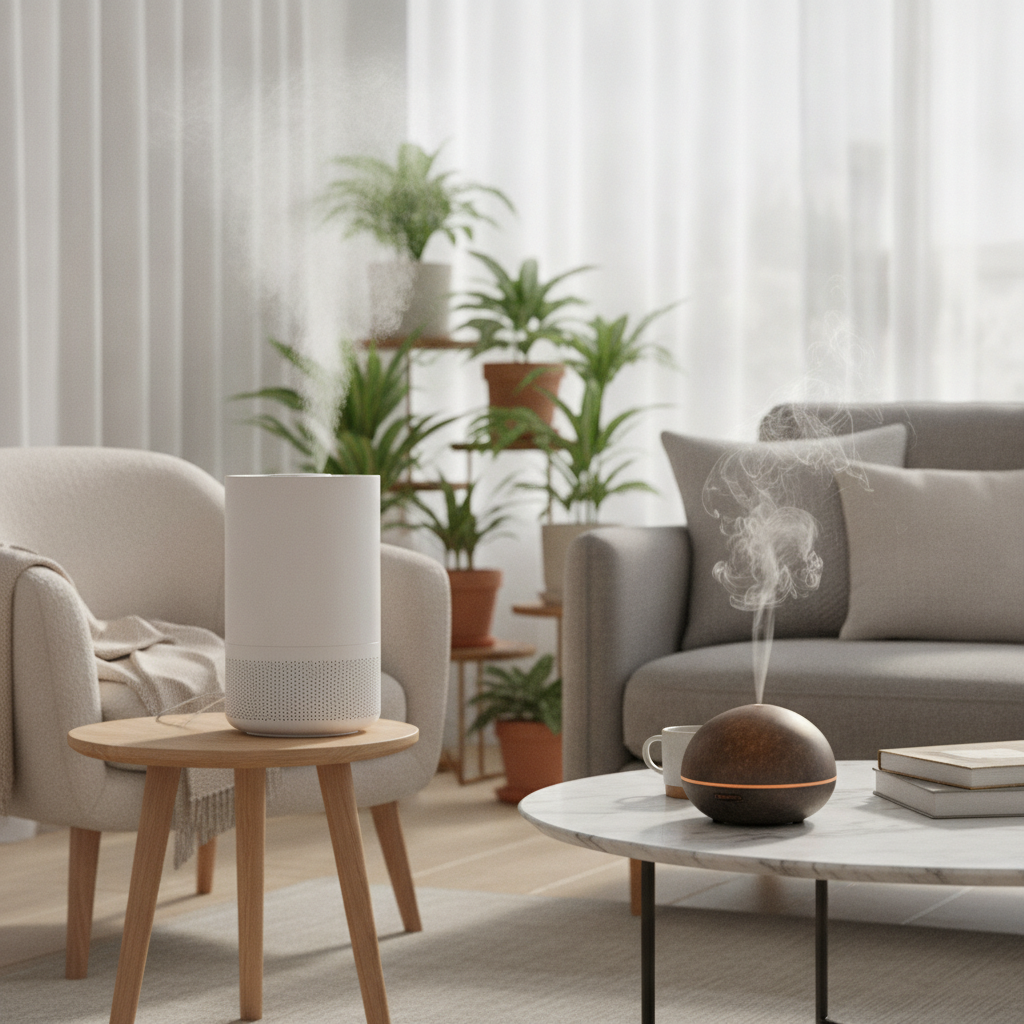
Humidifier vs Diffuser: Quick Comparison Table
Key Differences at a Glance
| Feature | Humidifier | Diffuser |
|---|---|---|
| Main Purpose | Adds moisture to air | Disperses essential oils |
| Effect on Air | Raises humidity | No change in humidity |
| Healthy Benefits | Relieves dry skin, cough | Promotes relaxation, fragrance |
| Common Use | Home, office, nursery | Home, spa, relaxation |
| Safe for Essential Oils | Usually not | Yes, designed for oils |
| Typical Water Capacity | Large tank (up to 6L) | Small tank (up to 500ml) |
Pros and Cons Summary
- Humidifier Pros: Improves humidity, helps with dry air, can ease allergy symptoms.
- Humidifier Cons: Needs regular cleaning, can’t use essential oils, sometimes noisy.
- Diffuser Pros: Spreads natural scents, supports relaxation and mood, easy to use.
- Diffuser Cons: Can’t improve dry air, limited water capacity, less impact on health.
What Is a Humidifier?
How Humidifiers Work
A humidifier is a device that increases the moisture in the air by releasing water vapor. It usually works by heating water or using vibrations to make tiny droplets that rise into the air.
Types of Humidifiers
- Evaporative Humidifier: Uses a filter and fan.
- Ultrasonic Humidifier: Uses high-frequency vibrations.
- Steam Vaporizers: Heats water to produce steam.
- Impeller Humidifier: Uses a rotating disk.
Common Uses of Humidifiers
- Preventing dry skin and lips.
- Easing allergy and asthma symptoms.
- Helping babies breathe easier.
- Protecting wooden furniture and musical instruments.
What Is a Diffuser?
How Diffusers Work
A diffuser spreads essential oils into the air. It doesn’t change the humidity but makes the room smell fresh and calm. Most diffusers use water, ultrasonic vibrations, or heat.
Types of Diffusers
- Ultrasonic Diffuser: Uses water and vibrations.
- Nebulizing Diffuser: Uses air pressure, no water needed.
- Heat Diffuser: Uses warmth to release scent.
- Evaporative Diffuser: Uses airflow to spread fragrance.
Popular Uses of Diffusers
- Creating relaxing atmosphere at home or spa.
- Improving focus during study or work.
- Reducing stress and boosting mood.
- Natural air freshener for any room.
Humidifier vs Diffuser: Choosing What’s Right for You
Benefits for Health, Air Quality, and Well-Being
- Humidifier: Better for dry air, skin, respiratory issues, prevents nosebleeds.
- Diffuser: Good for mental health, relaxation, pleasant scents, aromatherapy.
Intended Usage Scenarios (Home, Office, Nursery, Etc.)
- Humidifier: Bedrooms, nurseries, offices where humidity is needed.
- Diffuser: Living rooms, spas, meditation spaces, study areas for aroma.
Which to Choose for Allergies, Colds, Essential Oils & More
- Choose a humidifier for allergies, colds, dry skin.
- Pick a diffuser if you love essential oils and want fragrant air.
Safety, Maintenance, and Cost Differences
Cleaning and Maintenance Tips
- Always unplug before cleaning.
- Empty and rinse the tank every day.
- Clean with vinegar once a week.
- Check for mold or mineral build-up.
Cost of Ownership Over Time
- Humidifiers use more water and energy, slightly higher cost.
- Diffusers cost less to run but essential oils can be expensive.
- Both need periodic replacement of filters or parts.
Safety Precautions for Each Device
- Humidifiers: Keep away from electronics and pets, watch humidity levels.
- Diffusers: Use pure essential oils, don’t run nonstop, keep out of reach of children.
Top-Rated Humidifiers and Diffusers in 2026
Best Humidifiers for Different Needs
- Large Room: Ultrasonic humidifiers with big tanks.
- Baby Room: Quiet, cool-mist humidifiers.
- Travel: Compact portable models.
Best Diffusers for Every Setting
- Home: High-capacity ultrasonic diffusers.
- Workplace: USB-powered mini diffusers.
- Spa/Meditation: Nebulizers for strong aroma.
Where to Buy in 2026
- Online stores: Amazon, Walmart, dedicated appliance retailers.
- Local shops: Pharmacy, home goods stores.
- Specialty: Eco-friendly and aromatherapy shops.
FAQ: Humidifiers vs Diffusers
- Can I use essential oils in a humidifier? No, it may damage the unit or cause clogs.
- Will a diffuser raise the humidity? No, it only spreads fragrance.
- Which is better for allergies? Humidifiers are best for allergy relief.
- How often should I clean them? Clean at least once a week for both.
How to Set Up and Use a Humidifier or Diffuser Properly
Step-by-Step Setup Guide
- Read the user manual fully.
- Find a flat, safe surface away from electronics.
- Fill the tank with clean, fresh water (diffusers: add drops of essential oil).
- Connect to power and turn on according to instructions.
- Adjust settings for mist level or timer.
Tips for Maximizing Performance
- Use distilled water to avoid mineral deposits.
- Keep doors/windows closed while running.
- Don’t overfill the tank.
- Replace filters when needed.
- Store oils in a cool, dry place.
Final Thoughts: Which Should You Buy in 2026?
Choosing between a humidifier and a diffuser depends mainly on your needs. If you want to improve air moisture and support health, pick a humidifier. If you’re looking for better mood, aroma, and relaxation, a diffuser fits best. Always read product reviews, follow proper maintenance, and consider your room size and uses. With the right device, you can make your living space more comfortable and inviting in 2026.