

Why Grow Herbs Indoors All Year?
Benefits of Indoor Herb Gardening
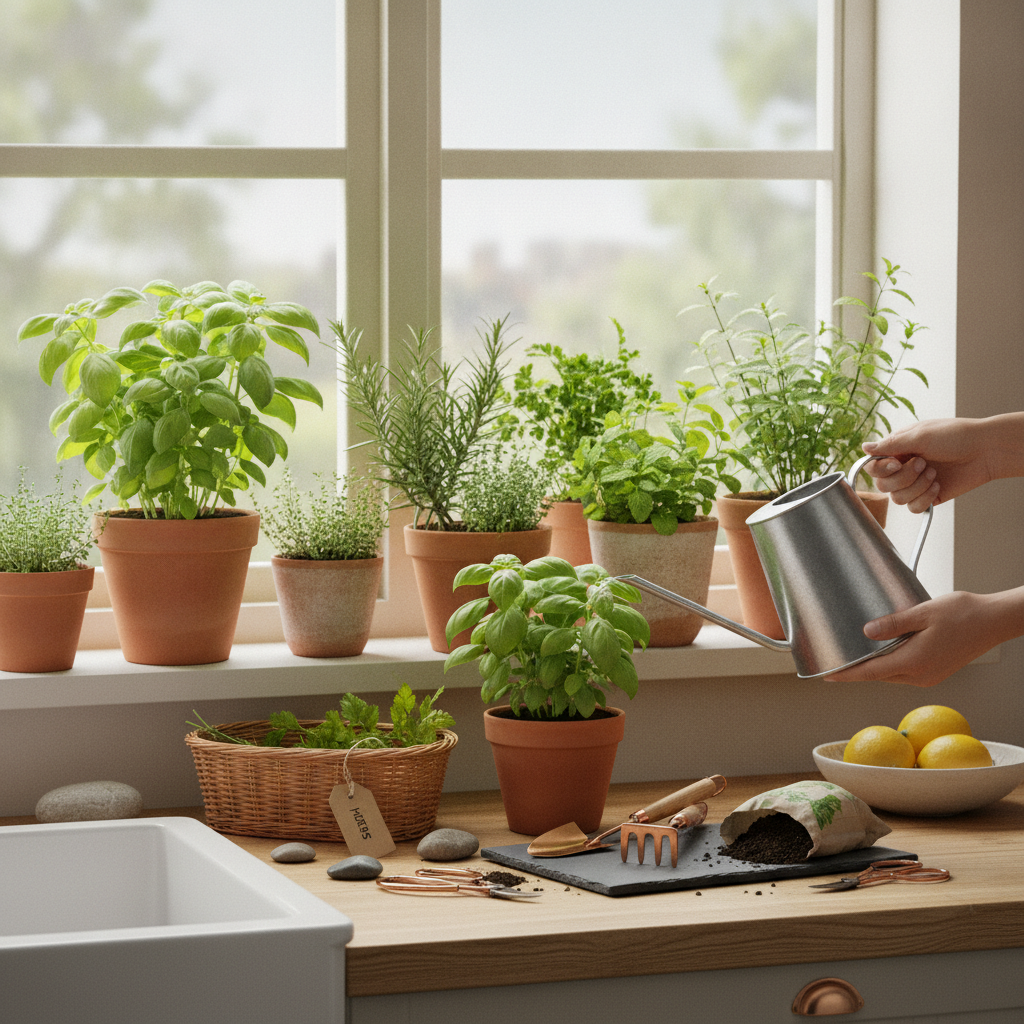
Growing herbs indoors gives you fresh ingredients every day. It saves money, makes meals tastier, and adds greenery to your home. Indoor gardens are easy to care for and do not depend on outdoor weather. You can also control pests and diseases better. This makes indoor herb gardening a smart choice for home gardeners of all ages and levels.
Popular Herbs That Thrive Indoors
- Basil
- Parsley
- Cilantro
- Mint
- Chives
- Oregano
- Rosemary
- Thyme
- Sage
These herbs grow well indoors if you provide the right conditions, such as enough light and water.
Essential Supplies for Year-Round Indoor Herb Growing
Containers and Pots
- Use pots with drainage holes to prevent root rot.
- Choose containers that are 4-6 inches wide for most herbs.
- Recycled jars and plastic bottles can work for microgreens.
Best Soil and Fertilizers for Indoor Herbs
- Use high-quality potting mix labeled for vegetables or herbs.
- Avoid garden soil, which can bring in pests.
- Add organic fertilizer (slow-release pellets or liquid feeds) every 4-6 weeks.
Selecting the Right Grow Lights
- Choose full-spectrum LED or fluorescent grow lights for best growth.
- Aim for 12-16 hours of light a day if sunlight is not enough.
Tools and Accessories
- Watering can or spray bottle
- Garden scissors or pruners
- Plant labels
- Small hand trowel
- Humidity tray (optional for dry homes)
Preparing Your Indoor Herb Garden
Choosing the Best Location in Your Home
- Pick a spot that receives bright light, like a south-facing window.
- If natural light is lacking, plan to use grow lights above your herbs.
Setting Up Lighting and Air Circulation
- Install grow lights 6-12 inches above plants.
- Set up a small fan nearby on low speed to help prevent fungal diseases and strengthen stems.
Organizing Your Herb Planters
- Group herbs with similar needs together, such as basil and cilantro which prefer moist soil.
- Place drought-tolerant herbs like rosemary on the outer edges, away from frequent watering zones.
- Arrange smaller pots on shelves or window ledges for easy access and light exposure.
Step-by-Step Guide: How to Grow Herbs Indoors All Year
Starting Herbs from Seeds vs. Transplants
- Choose seeds for the widest selection and lower cost.
- Buy healthy young plants (transplants) for quicker results and easier starts.
- Use seed-starting trays or small pots with moist seed-starting mix for seeds. Cover lightly and keep warm until germinated.
- Gently repot transplants into larger containers with potting mix.
Proper Planting Techniques
- Fill pots with potting mix, leaving about 1 inch at the top.
- Make small holes for seeds or transplants, following package directions for depth.
- Place seeds or root ball in hole, cover with soil, and press gently.
- Water gently but thoroughly.
Watering, Feeding, and General Care
- Check the soil moisture with your finger. Water when the top 1 inch feels dry.
- Avoid soggy soil. Empty water from saucers after watering.
- Feed herbs every 4-6 weeks with an organic liquid fertilizer. Dilute the fertilizer as directed.
Managing Temperature and Humidity
- Keep herbs at 65-75°F (18-24°C) during the day.
- Avoid cold drafts or placing herbs near heaters.
- Increase humidity by grouping plants or using a humidity tray if needed.
Pruning and Harvesting Herbs for Continuous Growth
- Begin harvesting when plants have four sets of true leaves.
- Snip leaves and stems above a set of leaves to encourage bushy growth.
- Never remove more than one-third of the plant at once.
Troubleshooting Common Indoor Herb Gardening Issues
Dealing with Pests and Diseases Indoors
- Check leaves weekly for tiny bugs or sticky residue.
- Rinse leaves with water or spray with insecticidal soap if pests appear.
- Remove any diseased, yellow, or damaged leaves quickly.
Fixing Leggy Growth or Poor Yields
- Move your herbs closer to the light source if stems are long and weak.
- Increase the amount of daily light using grow lights.
- Pinch back plants regularly for bushier growth.
Reviving Unhealthy Herbs
- Check roots for rot; replant in fresh soil if necessary.
- Trim off dead or yellow leaves.
- Adjust watering—most indoor herbs prefer evenly moist, not soggy, soil.
Best Herbs to Grow Indoors All Year
Basil, Parsley, and Cilantro
- Basil grows fast and prefers lots of light and moisture.
- Parsley tolerates lower light but grows slower.
- Cilantro needs even moisture and cooler temperatures to prevent bolting.
Mint, Chives, and Oregano
- Mint is easy to grow, but containerize it to keep it from spreading.
- Chives regrow after trimming and need moderate light.
- Oregano loves warmth and well-draining soil.
Rosemary, Thyme, and Sage
- Rosemary needs lots of sunlight, so a grow light helps.
- Thyme enjoys drier soil and resists many pests.
- Sage grows slowly but adds strong flavor to dishes.
Edible Microgreens and Specialty Herbs
- Microgreens like arugula, cress, and radish are quick to harvest in 1-3 weeks.
- Try specialty herbs such as stevia, lemon balm, or savory for variety.
Creative Tips for Maximizing Indoor Herb Harvests
Companion Planting Indoors
- Grow basil with chives to help control pests.
- Plant mint alone to prevent it from crowding others.
- Mix flowers like marigolds with herbs for extra color and pest resistance.
Using Vertical Space and Tiered Planters
- Hang pots on walls or windows to save space.
- Stack planters or use shelves for layered gardens.
- Rotate pots for even light exposure.
Indoor Hydroponic Herb Gardens
- Hydroponics means growing herbs without soil, using water and nutrients.
- This system provides faster growth and higher yields for many herbs.
- Starter hydroponic kits are available and fit well on most kitchen counters.
Frequently Asked Questions: Growing Herbs Indoors All Year
How Much Light Do Indoor Herbs Need?
Most herbs need 6-8 hours of sunlight or 12-16 hours under grow lights daily. Basil, rosemary, and thyme need the most light, while parsley and mint require less.
Can You Grow Herbs Without Natural Sunlight?
Yes, you can grow herbs indoors year-round using full-spectrum grow lights. Place the lights close to your plants and keep them on for up to 16 hours each day for best growth.
How Do You Keep Herbs Growing Through Winter?
Move herbs away from cold windows and drafts. Add grow lights for extra light, and reduce watering because herbs grow slower in winter. Keep the herbs at 65-75°F and increase humidity if your home is dry.
Resources and Recommended Products for Indoor Herb Gardening
- Seed companies: Burpee, Johnny’s Selected Seeds, Baker Creek
- Grow lights: Barrina LED, GE Grow Light, Spider Farmer
- Pots and soil: Miracle-Gro Indoor Potting Mix, EcoForms Pots
- Organic fertilizers: Espoma Indoor Plant Food, Neptune’s Harvest
- Beginner hydroponic kits: AeroGarden, iDOO, Click & Grow
- Plant care books and apps: “Indoor Kitchen Gardening” by Elizabeth Millard, the Planta app
With this guide, you can enjoy fresh herbs all year, improve your cooking, and make your home greener and healthier. Start small, learn as you grow, and soon you will have a thriving indoor herb garden.