

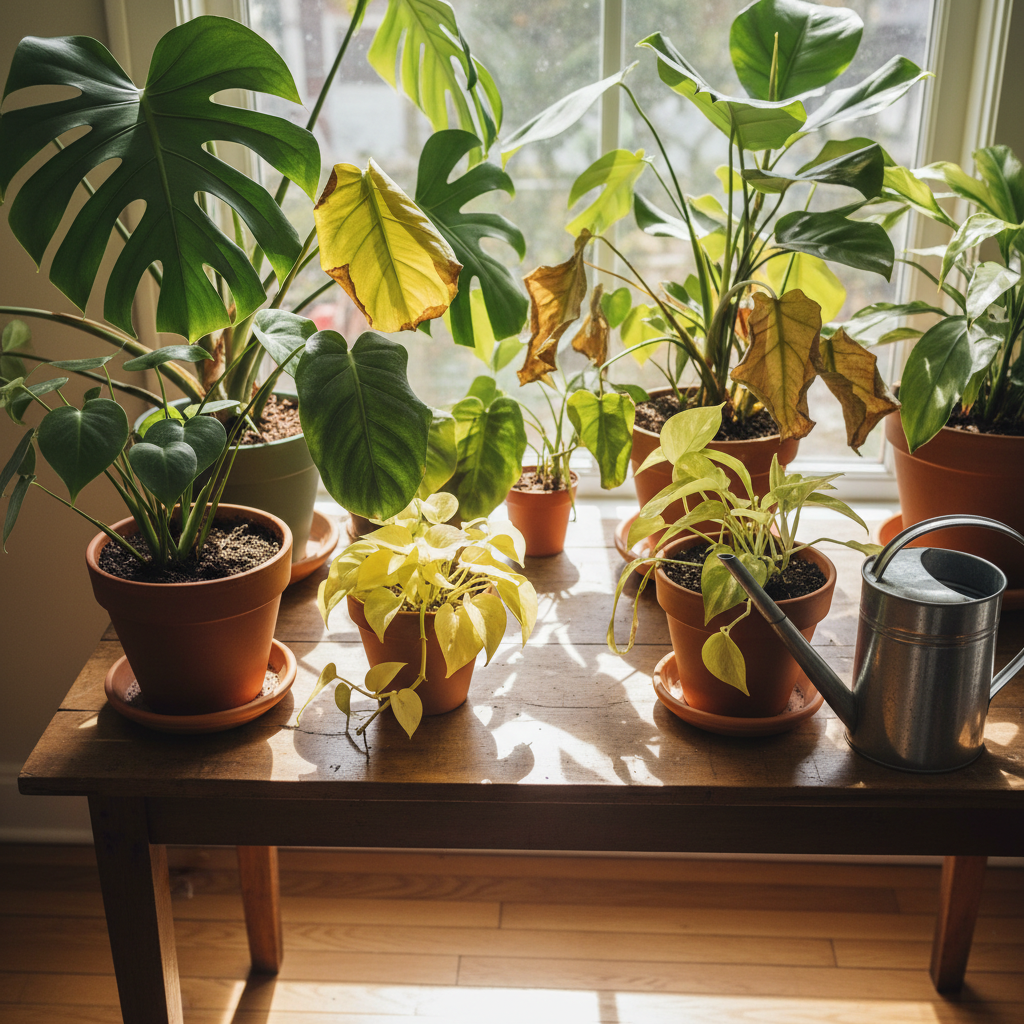
Quick Answers: 10 Reasons Your Plant Leaves Are Turning Yellow
Overwatering: How Too Much Water Triggers Yellow Leaves
Giving your plants too much water can drown their roots, stopping them from getting oxygen. This causes leaves to turn yellow, become soft, and drop off.
Underwatering: Recognizing Signs of Dehydration
When plants don’t get enough water, leaves wilt, become crispy, and yellow at the edges. Prolonged dryness can cause total leaf yellowing and loss.
Nutrient Deficiencies Causing Chlorosis
Lack of nutrients, like nitrogen, iron, or magnesium, leads to a condition called chlorosis, making leaves pale yellow while veins may stay green.
Improper Light Exposure and Leaf Yellowing
Too little sunlight stops photosynthesis, while too much burns leaves. Both extremes can cause yellowing depending on the plant’s needs.
Root Bound Plants and Lack of Space
Plants outgrowing their pots have tangled roots, leading to poor water and nutrient intake. This limits growth and turns leaves yellow.
Pest Infestations and Damage
Insects such as spider mites, aphids, and mealybugs suck plant juices, causing tiny yellow spots or overall yellowing on affected leaves.
Fungal or Bacterial Diseases
Diseases like root rot, leaf spot, or blight disrupt nutrients. These problems often show as yellow patches, spots, or edges on leaves.
Temperature Stress and Sudden Changes
Sudden drops or rises in temperature, cold drafts, or placing plants near heaters can cause stress, turning leaves yellow or brown.
Poor Soil Drainage and Compaction
Soil that holds water too long or is packed tightly limits air and can rot roots, leading to yellow leaves from root suffocation.
Natural Aging and Leaf Shedding
It’s normal for older leaves to turn yellow and fall off as part of a plant’s natural growth cycle, especially near the base.
How to Diagnose the Cause of Yellow Leaves
Visual Checklist for Symptoms
- Are whole leaves yellow or just parts?
- Are yellowing leaves crispy, soft, or spotted?
- Is the yellowing on older, lower leaves or new growth?
Testing Soil Moisture and Quality
- Check soil one inch deep with your finger. Wet? Dry?
- Use a soil tester for pH and nutrients if available.
Examining Roots and Pot Size
- Carefully remove the plant from its pot. Are roots circling and tight (root bound) or mushy and dark (rot)?
- Is the pot big enough for healthy root growth?
Identifying Patterns and Progression
- Has yellowing spread quickly or slowly?
- Are there pests or insects on leaves or soil?
- Is there mold, bad smell, or other rot signs?
Step-by-Step Solutions for Each Yellowing Cause
Fixing Overwatering and Underwatering Issues
- For overwatering: Allow soil to dry out before watering again. Check drainage holes are not blocked.
- For underwatering: Water plant thoroughly until excess drains out. Set a regular watering schedule based on the plant type.
Correcting Nutrient Imbalances: Fertilizer Tips
- Identify which nutrient is missing (most commonly nitrogen, iron, or magnesium).
- Apply a balanced fertilizer or specific supplement as directed on the label.
- Avoid over-fertilizing; too much can burn roots and worsen yellowing.
Adjusting Sunlight and Placement
- Check the plant’s specific light needs (full sun, partial shade, or indirect).
- Move the plant to a spot that matches its light requirements.
- If needed, use grow lights or protect from harsh afternoon sun.
Repotting and Managing Roots
- If root bound, gently loosen roots and move to a larger pot with fresh, well-draining soil.
- If roots are rotten, trim damaged parts and repot in dry, healthy soil.
Treating Pests and Disease Naturally and Safely
- Isolate the affected plant to prevent spread.
- Use insecticidal soap or neem oil for pests. Wipe leaves and stems.
- For fungal diseases, cut off infected leaves and avoid wetting foliage.
- Improve airflow and keep leaves dry to prevent further problems.
Preventing Yellow Leaves: Pro Care Tips
Best Watering Practices by Plant Type
- Cacti and succulents: Let soil dry completely before watering.
- Tropical plants: Keep soil lightly moist, never soggy or dry.
- Flowering plants: Water when top inch of soil is dry.
Ideal Fertilization Schedules
- Feed most houseplants every 4-6 weeks in growing season (spring/summer).
- Pause fertilizing during dormancy (fall/winter), unless plant is actively growing.
Seasonal Care and Light Adjustments
- Move outdoor potted plants indoors before first frost.
- Rotate plants to give even light exposure year-round.
Monitoring and Regular Plant Checkups
- Inspect leaves and soil for pests or disease every week.
- Check pot edges for root growth peeking out.
- Replace or refresh a layer of soil every year for best growth.
FAQ: Yellow Leaves on Indoor and Outdoor Plants
- Is it normal for some tree leaves to turn yellow in fall? Yes, it’s normal during natural dormancy seasons.
- What if only the tips of leaves are yellow or brown? This usually means underwatering or low humidity.
- Are yellow leaves always a bad sign? No, some yellowing is natural, but sudden spread suggests a care problem.
- Can tap water cause yellow leaves? Yes, high salts or chlorine can stress sensitive plants. Use filtered or distilled water if possible.
Resources for Plant Leaf Health and Troubleshooting
- Royal Horticultural Society: Plant leaf yellowing guide
- Penn State Extension: Plant nutrient management
- Gardeners.com: Houseplant care tips
Background and Tutorial Value
Yellow leaves are a common plant care issue. Understanding the causes, diagnosis, and reliable solutions helps you keep your plants healthy and thriving. This guide provides clear steps and answers for beginners and intermediates.
Preparation: Tools and Materials Needed
- Watering can with narrow spout
- Fertilizer (balanced or specific as needed)
- Soil moisture tester (optional, but helpful)
- Pots with drainage holes
- Potting soil for your plant type
- Neem oil or insecticidal soap
- Pruning shears
- Rubber gloves (for handling pests or diseases)
Step-by-Step Tutorial: Detailed Actions
Step 1: Identify Yellowing Pattern
- Check if yellowing is on new or old leaves.
- Look for spots, crispy edges, or overall color changes.
Step 2: Test Soil Moisture
- Stick your finger or moisture tester one inch into soil.
- If wet, skip watering and check drainage. If dry, water the plant well.
Step 3: Inspect for Pests and Disease
- Examine leaf undersides and stems for tiny insects or sticky residue.
- Watch for black, brown, or moldy patches indicating disease.
Step 4: Evaluate Light and Temperature
- Review if the plant is receiving the right amount of sunlight each day.
- Check room or outdoor temperatures, avoiding quick changes.
Step 5: Assess Root Health
- Tap the pot to loosen, then gently remove the plant to inspect roots.
- If roots are brown, mushy, or circling tightly, fix as described above.
Step 6: Correct Identified Problem
- Follow the specific solution steps for watering, nutrients, light, or pests.
- Repot if needed into a larger or healthier soil environment.
Step 7: Follow Up and Monitor Changes
- Check improvements in 7-14 days. Remove dead leaves and adjust care if needed.
- Repeat regular checkups to spot new problems early.
Common Problems and Solutions
- Problem: Leaves stay yellow after watering or fertilizing.
Solution: Check for root rot or pests. Repot if needed. - Problem: Yellowing spreads quickly across the whole plant.
Solution: Inspect for disease. Isolate the plant. Treat as needed. - Problem: Confused about fertilizer amounts.
Solution: Start with half the dose listed and watch for improvements.
Advanced Tips: Optimizing Plant Health
- Rotate plants every few weeks for even growth and light exposure.
- Flush salts from pots every two months by soaking and draining twice.
- Use room-temperature rainwater or filtered water when possible.
- Group humidity-loving plants together to create a moister microclimate.
Summary: Key Points and Next Steps
- Yellow leaves are often a clue to underlying care issues.
- Observe, diagnose, and act early for quick recovery.
- Consistent routines and frequent checkups prevent most common problems.
- Use this guide to troubleshoot, learn, and enjoy healthier, greener plants.