

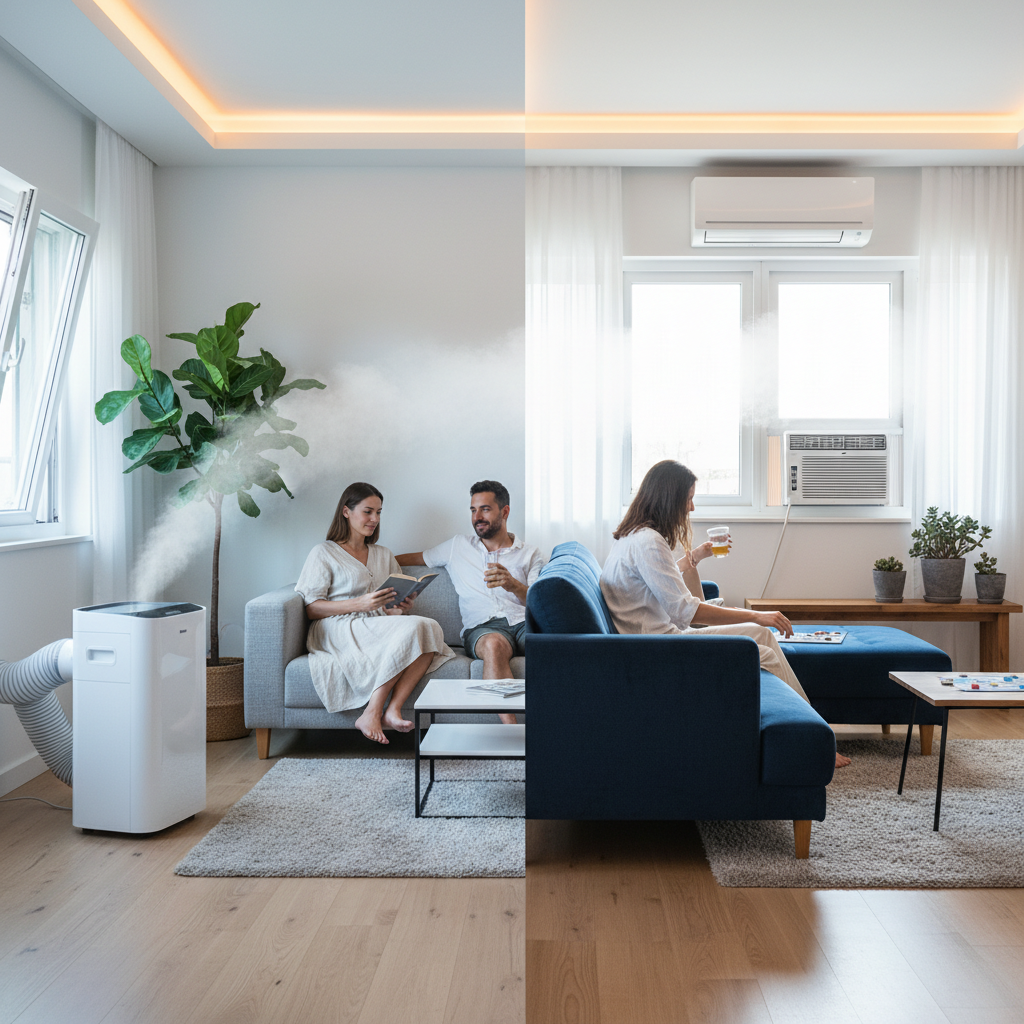
Understanding Portable ACs and Window ACs
What Is a Portable Air Conditioner?
A portable air conditioner is a cooling device that can be moved from one room to another. It pulls in warm air from the room, cools it, and then blows the cool air back. Hot air is sent outside through a hose placed in a window or door. Portable ACs are popular because they don’t require permanent installation.
What Is a Window Air Conditioner?
A window air conditioner is designed to fit in a window opening. It cools the air inside while pushing hot air outside. Window ACs are more permanent than portable ACs and usually stay in one place until removed.
Key Terminology and Technology in 2026
Some technology and terms to know in 2026 include Smart ACs (which connect to WiFi and apps), inverter technology (for energy savings), and refrigerant types (R-32 and eco-friendly options). Knowing these terms helps you understand product features and benefits when comparing ACs.
Portable AC vs Window AC: Feature Comparison
Installation Process and Space Requirements
- Portable ACs: Simple to install. Just attach the exhaust hose to a window kit, plug in, and start cooling. No tools are needed in most cases. They need floor space near a window and a power outlet.
- Window ACs: Need to be fitted into a window. You may need tools for mounting and sealing. They don’t take up floor space but block part of your window view and natural light.
Cooling Performance and Room Coverage
- Portable ACs: Best for small to medium rooms (100–450 sq ft). Cooling depends on model power (measured in BTU). Good for single rooms or spot cooling.
- Window ACs: Usually offer stronger cooling for the same size. Can cover larger rooms (up to 700 sq ft or more). Better for open-plan spaces or continuous use.
Energy Efficiency and Electricity Costs
- Portable ACs: Generally less efficient. They can use more electricity to cool the same area. Look for models with an Energy Star rating and inverter technology for better efficiency.
- Window ACs: Most models are more efficient, especially modern inverter types. Lower long-term electricity costs if used often.
Noise Levels and User Comfort
- Portable ACs: Louder because all parts run inside your room. Typical noise: 50–60 dB.
- Window ACs: Quieter, as the noisy compressor sits outside. Typical noise: 40–55 dB.
Portability and Flexibility
- Portable ACs: Easy to move between rooms. Useful in rentals, for spot cooling or backup use.
- Window ACs: Not portable. Must be removed and reinstalled to move. Better for permanent locations.
Cost Breakdown: Portable AC vs Window AC
Upfront Purchase Price
- Portable ACs: $200–$700 for most home models (2026 prices).
- Window ACs: $180–$650 for similar cooling power.
Maintenance and Replacement Costs
- Portable ACs: Filters need monthly cleaning. Some have tanks that collect water, which you need to empty. Replace after 5–7 years.
- Window ACs: Also require filter cleaning, but usually drain water automatically. Can last 7–10 years with care.
Long-Term Value for Money
Window ACs often offer more value long-term due to lower energy costs and longer lifespan. Portable ACs cost more to run but can save money if you only cool rooms when needed.
Suitability: Which Is Better for Your Needs?
Best Choice for Apartments and Rentals
Portable ACs are ideal for renters: no permanent changes, easy installation, and you can take them with you when you move.
Best Option for Homeowners
Window ACs are better for homeowners who want efficient, permanent cooling for one or more rooms, especially where installation is allowed.
Considerations for Climate and Location
- Warm, humid climates: Window ACs handle the heat and humidity better.
- Mild climates or occasional heat: Portable ACs are convenient and flexible.
User Experiences and Common Issues in 2026
Real-Life User Feedback
- Portable AC users like the simple setup and flexibility, but complain about noise and water draining.
- Window AC users enjoy quiet operation and strong cooling, but mention tricky installation and blocked windows.
Troubleshooting Common Problems
- Portable ACs: If not cooling, check if the exhaust hose is blocked, or the filter is dirty.
- Window ACs: If not turning on, check the power outlet and remote batteries. If leaking, check the slope for drainage.
How to Choose Between Portable and Window AC: Step-by-Step
- Measure Your Room Size
Calculate room area to decide on the power (BTU) needed. - Check Window Type
See if your window can support a window AC unit. Casement, sliding, and small windows may not fit. - Decide Installation Limits
Are you allowed to make changes to windows or walls? Renters may face restrictions. - Consider Mobility Needs
Will you move the AC between rooms? Choose portable for flexible use. - Compare Energy Star Ratings
Choose models with better efficiency to save money over time. - Set Your Budget
Include purchase, running, and maintenance costs in your plan. - Read User Reviews (2026)
Check feedback for real-world performance and reliability. - Make Your Decision
Select the model that matches your needs, space, and budget.
FAQ: Portable AC vs Window AC
- Q: Which cools faster, a portable or window AC?
A: Window ACs usually cool quicker and cover more space for the same power. - Q: Can I install a window AC without help?
A: Yes, but larger models can be heavy. It’s safer with two people. - Q: Do portable ACs need water drainage?
A: Most do. Some models have self-evaporating systems, but many require you to empty a tank. - Q: Is a portable AC really portable?
A: Yes, but they weigh 50–80 lbs. They do have wheels, making them easy to push across floors. - Q: Which type is quieter?
A: Window ACs are usually quieter because their noisy parts are outside.
References and Further Reading (2026 Updated)
- Energy Star: Guide to Air Conditioners (2026)
- Consumer Reports: Portable vs. Window ACs – Pros and Cons (2026)
- AC Technology Update – Smart Home Magazine (January 2026)
- U.S. Department of Energy: Cooling with Room Air Conditioners (2026)