

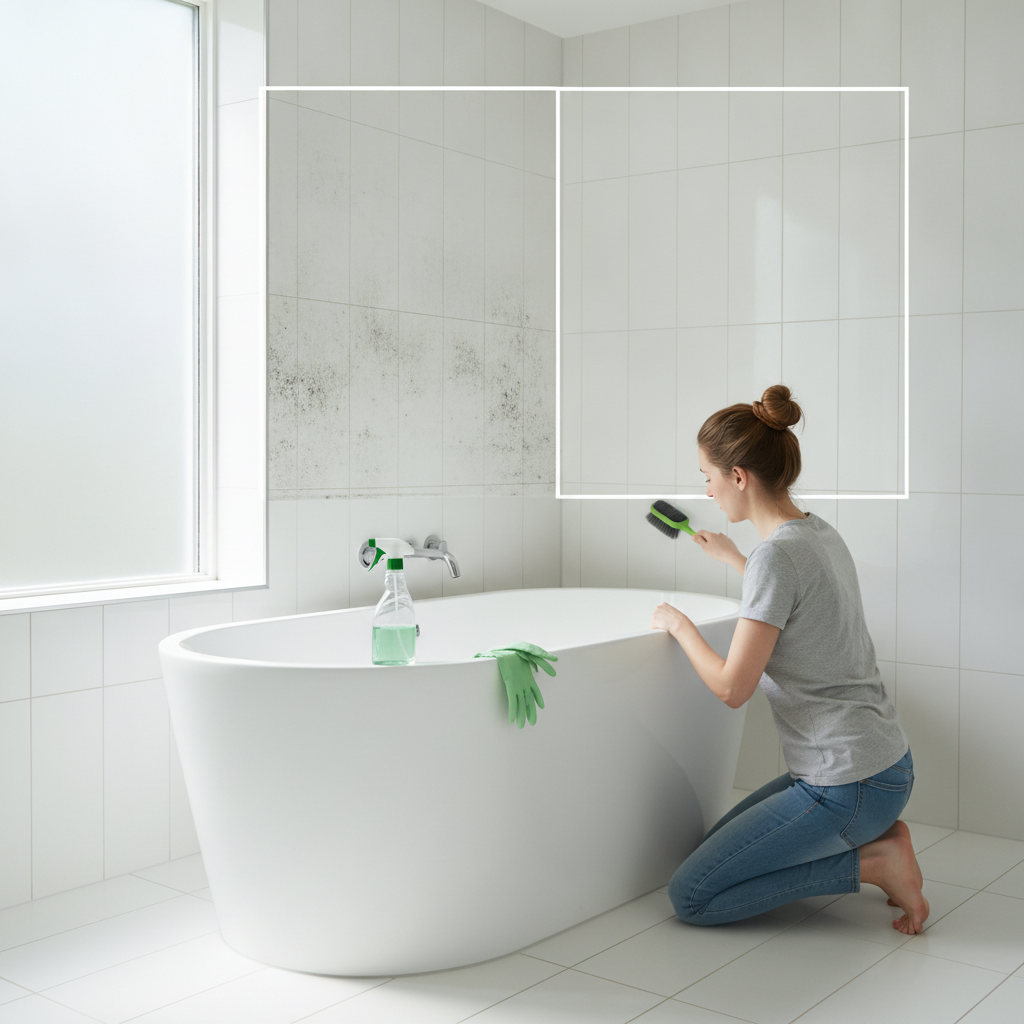
Understanding Bathroom Mold and Its Health Risks
Common Types of Mold Found in Bathrooms
Bathrooms often have black mold (Stachybotrys), green mold (Cladosporium), and white mold (Penicillium). These molds grow quickly in damp spaces with little sunlight.
Why Mold Grows in Bathrooms
Mold needs moisture, warmth, and organic material. Bathrooms provide all three: steam from showers, warm air, and organic dirt from soap and shampoo. Poor ventilation makes this worse and encourages mold to spread.
Health Concerns Associated with Bathroom Mold
Mold in the bathroom can cause allergies, asthma attacks, coughs, sneezing, eye irritation, and skin rashes. People with weak immune systems may be at higher risk. Removing mold protects you and your family from health problems.
Signs and Symptoms: How to Detect Mold in Your Bathroom
Visual Indicators of Mold Growth
Look for black, green, or white spots on tiles, grout, walls, ceilings, and around the bathtub. Stained or peeling paint is also a warning sign.
Odor and Hidden Mold Signs
A musty, earthy smell in your bathroom often means hidden mold behind walls or under floors. Mold can grow out of view, so trust your nose even if you can’t see it.
Early Warning Signs and Prevention Tips
- Persistent moisture on surfaces
- Water stains
- Condensation on mirrors or windows
- To prevent mold, clean up water spills quickly and fix leaks.
Preparations Before Removing Bathroom Mold
Essential Safety Precautions
- Open windows and doors for ventilation.
- Turn off fans to keep mold spores from spreading.
- Keep children and pets away from the area while you clean.
Protective Gear and Tools Needed
- Rubber gloves
- Face mask or respirator (N95 or better)
- Goggles to protect your eyes
- Scrub brush or old toothbrush
- Bucket
- Sponges or cloths
- Spray bottle
- Cleaning solution (natural or chemical)
- Plastic bags for trash
How to Isolate the Affected Area
- Close the bathroom door.
- Seal vents and open gaps with tape and plastic sheets to stop spores from spreading.
- Remove rugs, towels, and items from the bathroom.
Step-by-Step Guide: How to Get Rid of Mold in the Bathroom
Cleaning Tile and Grout Mold
- Spray the area with a mold cleaner.
- Let the solution sit for 10-15 minutes to kill mold spores.
- Scrub with a brush, focusing on grout lines.
- Wipe away the residue with a wet cloth.
- Rinse and dry the surface completely.
Removing Mold from Walls and Ceilings
- Apply cleaner to affected walls and ceilings using a spray bottle.
- Wait 10 minutes for the cleaner to work.
- Gently scrub the area with a brush or sponge.
- Use a damp cloth to wipe off loosened mold.
- Let the area air-dry; use a fan or open window for faster drying.
Treating Mold on Bathroom Fixtures and Caulking
- Spray mold cleaner on faucets, handles, and shower heads.
- Scrub with an old toothbrush to reach small crevices.
- For caulking, apply cleaner and let it sit, then scrub. If the caulk is damaged, remove and replace it.
- Wipe surfaces clean and dry completely.
Using Natural vs. Chemical Solutions for Mold Removal
| Solution Type | Advantages | When to Use |
|---|---|---|
| Natural (vinegar, baking soda) | Safer, no harsh fumes | Light to moderate mold, sensitive households |
| Chemical (bleach, commercial cleaners) | Faster, kills most mold types | Severe mold, stubborn stains |
Preventing Bathroom Mold: Long-Term Strategies
Improving Bathroom Ventilation
- Install or use the exhaust fan during and after showers.
- Open windows to reduce humidity and moisture.
- Consider a dehumidifier for damp bathrooms.
Regular Cleaning Routines
- Clean tiles, grout, and corners weekly with a mildew-fighting solution.
- Wash shower curtains and bath mats regularly.
- Dry sinks, tubs, and shower walls after use.
Moisture Control and Maintenance Tips
- Fix leaks in pipes, faucets, and connections quickly.
- Wipe down wet surfaces and use a squeegee on shower walls.
- Replace old sealants or caulking that trap moisture.
Frequently Asked Questions: How to Get Rid of Mold in the Bathroom
Is bathroom mold dangerous?
Yes. Bathroom mold can cause breathing problems and allergic reactions. It is especially risky for people with asthma, allergies, or weakened immune systems.
Can mold return after removal?
Mold can come back if moisture is not controlled. Keep your bathroom dry and clean to stop new mold growth.
Should I hire a professional for mold removal?
For small areas, you can clean mold yourself. Call a professional if the mold covers a large area (over 1 square meter), or if you have health concerns.
Resources and Further Reading for Mold Removal in Bathrooms
- Centers for Disease Control and Prevention (CDC) Mold Information
- Environmental Protection Agency (EPA) Guide to Mold Cleanup
- American Lung Association: Mold and Your Home
- Home improvement books and local health department guides