

Introduction to French Hair Pins and Their Benefits
What Is a French Hair Pin?
A French hair pin is a simple, U-shaped accessory used to hold hair in place. It is usually made from metal, plastic, or wood. French hair pins are known for their elegant design and strong grip. They are commonly used to create secure buns, twists, and updos.
Why Choose a French Hair Pin for Healthy Hair?
French hair pins are gentle on hair. They do not pull or snag like some elastic bands. This helps prevent breakage and hair loss. Using a French hair pin spreads pressure more evenly, which keeps hair healthier and stronger.
French Hair Pin vs. Other Hair Accessories
- French hair pin: Minimal tension, less damage, secure.
- Elastic bands: Can pull, cause breakage, leave dents.
- Bobby pins: Good for small sections but may cause tangling if used too much.
- Claw clips: Easy to use, but may not hold thick hair as securely as French pins.
Preparing Your Hair for Using a French Hair Pin
Best Hair Types and Lengths for French Hair Pins
French hair pins work best with medium to long hair. They are suitable for straight, wavy, or curly textures. Hair should be long enough to twist or wrap into a bun for best results.
Essential Tools and Products for Hair Health
- Wide-tooth comb for detangling
- Leave-in conditioner or smoothing serum
- French hair pins (choose quality, smooth ends)
- Light hairspray (optional)
- Hair ties (for prepping hair if needed)
Step-by-Step: How to Use a French Hair Pin
Basic Method for Securing Hair
- Start with brushed, detangled hair.
- Gather hair into the style you want, such as a ponytail or bun shape.
- Hold the hair with one hand. With the other hand, insert the French hair pin into the base, tip pointing away from your head.
- Flip the pin 180 degrees so the curve faces your scalp, then slide it back toward your head. This anchors the pin and keeps hair secure.
- Adjust as needed. Use extra pins for thicker or longer hair.
Creating Bun Styles with a French Hair Pin
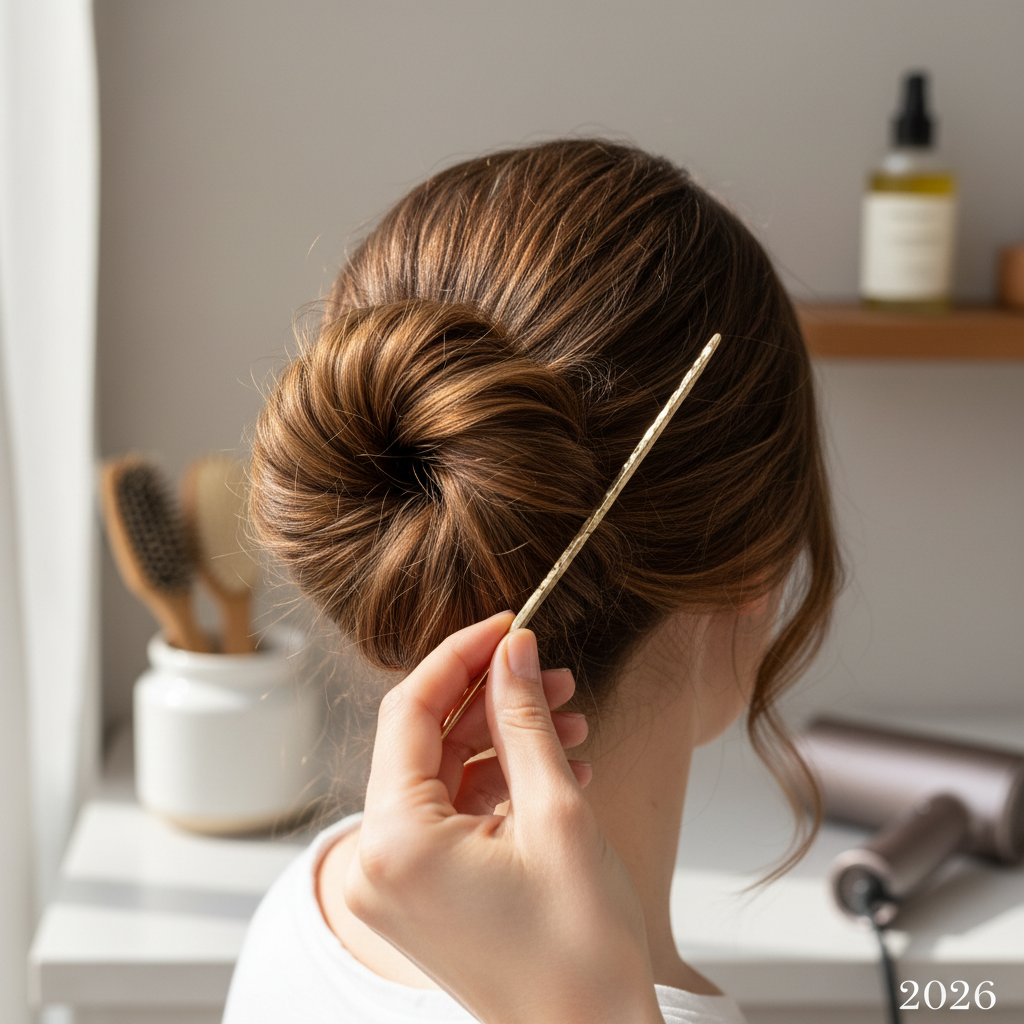
- Gather your hair into a ponytail. Twist the hair until it coils into a bun against your head.
- Hold the bun in place. Insert the French hair pin at one edge of the bun, with the tips pointing out.
- Twist the pin so the curve follows the shape of your head, and push the pin into the center of the bun.
- Add a second pin on the opposite side for thick or heavy hair.
- Check that the bun feels secure. Tuck in any loose ends.
French Twist Tutorial Using a French Hair Pin
- Comb your hair back and hold it at the nape of your neck.
- Twist the hair upward. Tuck the ends inside as you roll the twist toward your scalp.
- Insert a French hair pin at the bottom of the twist, pointing upward and away from your head.
- Flip the pin so it lays flush to your scalp, then push it into the twist to secure the style.
- Use extra pins if needed for a firm hold. Smooth the top with your hands or a comb.
Tips for Keeping Hair Healthy When Using French Hair Pins
Preventing Damage and Hair Breakage
- Use only smooth, good-quality French hair pins without sharp edges.
- Avoid pulling hair too tight. Gently twist or wrap your hair.
- Remove pins carefully. Never yank them out; slide them gently along your scalp.
- Give your hair a break from updos now and then to prevent stress on your roots.
Choosing Hair Pins for Sensitive Scalps
- Pick French hair pins made from smooth, hypoallergenic materials like plastic or coated metal.
- Avoid pins that feel heavy, rough, or scratchy on your scalp.
- If you notice discomfort, switch to a different pin design or use fewer pins.
Styling Ideas with French Hair Pins for Every Occasion
Everyday Looks
- Simple messy bun for school or home
- Half-up twist for a relaxed style
- Low chignon for quick, neat hair
Formal and Event Styles
- Sleek French twist for proms or dance events
- Elegant low bun with decorative French hair pin
- Twisted updo with face-framing strands
Active Lifestyle Hairstyles
- Secure high bun for sports or gym
- Twisted ponytail held with pins
- Tight, wrapped bun for dance or yoga
Cleaning and Caring for Your French Hair Pin
Materials and Maintenance
- Metal pins: Wipe with a damp cloth; dry thoroughly to avoid rust.
- Plastic pins: Wash gently with soap and water; dry before storing.
- Wooden pins: Avoid soaking. Wipe clean and allow to air dry.
Storage Tips
- Store pins in a box or pouch to keep them clean and prevent loss.
- Keep pins away from heavy items that might bend or damage them.
- Check pins regularly and replace any with bent or rough tips.
FAQ: Common Questions About Using French Hair Pins
- Q: Why do my pins slip out?
A: Make sure you twist or flip the pin after inserting. This helps anchor it firmly. - Q: Can I use French hair pins on short hair?
A: It is best for medium to long hair, but you may secure small sections if your hair is thick enough. - Q: How many pins do I need?
A: One or two pins usually work for medium hair. Use more for thick or long hair. - Q: Do pins damage hair?
A: When used correctly and gently, French pins are among the healthiest options for securing hair.
References and Further Reading on Hair Health and Styling
- American Academy of Dermatology: Tips for healthy hair
- Professional hair stylist blogs on updo techniques
- Cosmetic science resources about hair health and accessory safety
- Style magazines featuring hair trends with French hair pins