

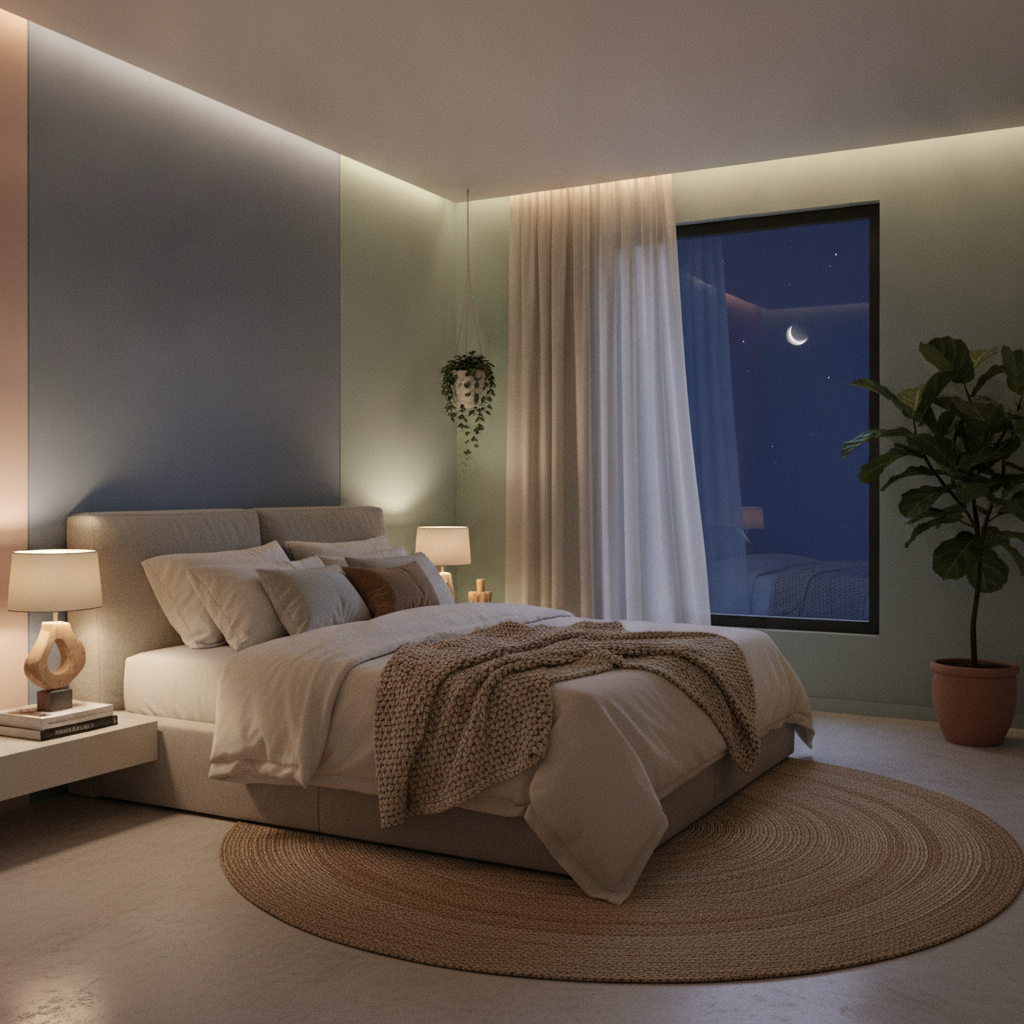
Why Bedroom Colors Matter for Sleep Quality
The Science Behind Color and Sleep
Did you know that the colors you choose for your bedroom can affect how well you sleep? Color influences your mood and body. Studies show that some colors help you relax, while others can make you feel active or anxious. When it comes to sleep, science suggests that calm and cool colors help your brain slow down and get ready for rest.
Psychological Effects of Bedroom Colors
Colors can change how you feel. For example, bright reds or oranges can make you feel alert. In contrast, soft blues and greens are often linked to calmness and peace. This is why selecting the right bedroom colors is an important step toward better sleep.
How to Choose the Best Bedroom Colors for Better Sleep
Factors to Consider (Room Size, Natural Light, Personal Preference)
- Room Size: Lighter colors can make a small room feel larger. Dark colors add coziness but might make a room feel smaller.
- Natural Light: If you have lots of sunlight during the day, cooler tones may appear brighter. If your room is darker, warmer colors might make it feel more welcoming.
- Personal Preference: Always consider what colors make you feel relaxed and happy. Your bedroom should reflect your personality as well as promote good sleep.
Warm vs. Cool Colors: Which Is Better for Sleep?
Cool colors like blue, green, and lavender tend to calm the mind and help with sleep. Warm colors such as red, yellow, and orange can be energizing and may disrupt rest. For most people, cool colors are a better choice for the bedroom, but soft shades of warm colors can also work if they are not too bright.
Top Bedroom Colors for Better Sleep in 2026
Blue – The Most Sleep-Friendly Choice
Blue is often the best choice for sleep. Research shows that blue walls can lower your heart rate and reduce blood pressure, helping you relax quickly. Light and medium blues are especially recommended for bedrooms.
Green – Calm and Relaxing
Green is another great color for sleep. It reminds the brain of nature and helps create a peaceful setting. Soft greens are gentle on your eyes and can reduce stress.
Soft Gray – Subtle and Soothing
Gray is neutral and very calm. Soft gray shades work well to create a relaxing space. Just make sure your gray is not too dark, as deep grays can sometimes feel depressing.
Lavender – Gentle and Tranquil
Light purple or lavender tones are both beautiful and restful. They offer the calmness of blue with a touch of warmth, making them a favorite for people who want a gentle but colorful bedroom.
Other Trending Colors for Sleep This Year
- Beige and taupe – warm neutrals that add comfort
- Soft blush – a light pink for gentle warmth
- Pale aqua – a light, watery blue-green
How to Incorporate Sleep-Enhancing Colors in Your Bedroom
Wall Paint Ideas
- Test paint samples on your wall to see them in different lights.
- Choose washable, low-odor paint for healthier air quality.
- Use lighter shades for main walls and deeper tones for accent walls.
- Paint ceilings a pale tone to give the room an open, airy feeling.
Bedding and Accessories
- Select bed linens in your chosen sleep-enhancing color or shades that harmonize with your wall color.
- Use throw blankets and pillows to add layers of color.
- Pick light-blocking curtains in calming tones for extra sleep support.
- Add rugs in gentle colors to create an inviting, peaceful space.
Accent Walls and Decor Tips
- Create an accent wall behind your bed with a deeper or contrasting sleep-friendly color.
- Use framed artwork, plants, or decor items in relaxing shades to tie the room together.
- Keep patterns simple to avoid overstimulation before bed.
Common Mistakes to Avoid When Choosing Bedroom Colors for Sleep
- Choosing super bright or neon colors that can make it hard to relax.
- Painting the whole room a very dark color, which can feel confining.
- Ignoring your own preferences and picking a trendy color you don’t actually like.
- Using too many different colors, making the room feel busy rather than restful.
FAQ: Best Bedroom Colors for Better Sleep
- Q: Are dark colors always bad for sleep?
A: Not always. Deeper shades can be cozy, but avoid dark tones if your room has little natural light or already feels cramped. - Q: Can I use wallpaper in my sleep-friendly bedroom?
A: Yes, as long as the patterns are simple and the colors are calming, wallpaper can work well. - Q: Is white a good bedroom color for sleep?
A: White can feel fresh and open, but it may look harsh or cold if overused. Pair it with calming accents for better effects. - Q: How often should I repaint my bedroom?
A: Most people repaint every 5-7 years or whenever they want a change for better sleep.
Expert Tips for Transforming Your Bedroom into a Sleep Haven
- Limit electronics and clutter—even the best color can’t help if your room is busy or noisy.
- Choose non-toxic, low-VOC paints for better indoor air quality.
- Update your bedroom lighting with dimmable, soft white bulbs that mimic natural evening light.
- Keep your bedding fresh, clean, and gentle to the touch to support restful sleep.
- Add natural elements, like potted plants, to enhance calmness—and match your color scheme.
Summary: Key Points and Next Steps
Choosing the best bedroom colors for better sleep is simple if you know what to look for. Stick to cool, calming shades like blue, green, soft gray, or lavender. Remember to test your color in your own space with your lighting. Avoid harsh, bright, or overly dark tones unless you love them and they help you relax. Use wall paint, bedding, and accessories to create a calming bedroom. Avoid clutter and keep the space simple to maximize sleep benefits. Your next step is to try paint samples, pick your favorite relaxing color, and start your bedroom transformation for healthier sleep.