

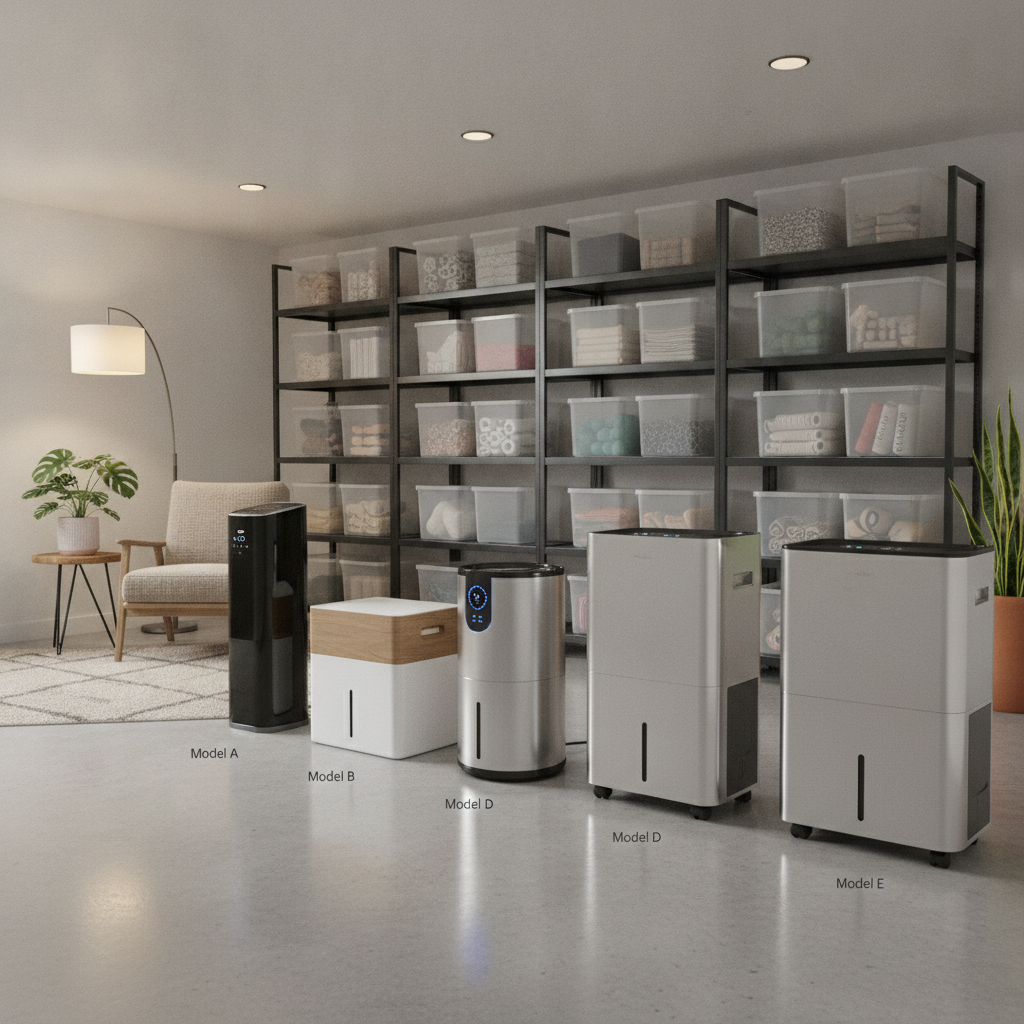
Why Basement Dehumidifiers Matter: Moisture and Mold Risks
Key Signs You Need a Dehumidifier in Your Basement
Basements are often damp and musty. This environment can cause problems if left untreated. Here are key signs you need a dehumidifier:
- Condensation on windows or walls
- A musty or moldy smell
- Visible mold spots on surfaces
- Damp or wet floors and walls
- Peeling paint or wallpaper due to moisture
- Rust on pipes or appliances
- Warped or damaged wood
Health Risks Linked to High Humidity
High humidity can be dangerous for your health. Here are some of the risks:
- Mold growth that can trigger allergies and asthma
- Breeding ground for dust mites
- Respiratory issues, such as coughing or shortness of breath
- Worsening of skin conditions like eczema
- Increased risk for infections due to bacteria and fungi
Choosing the Best Dehumidifier for Basements: What to Look For
Main Features: Capacity, Coverage, Drainage
When buying a basement dehumidifier, look at these main features:
- Capacity: Measured in pints per day, it shows how much water the unit can remove. Choose higher capacity for bigger, damper basements.
- Coverage Area: Check the square footage the dehumidifier can handle.
- Drainage Options: Some have buckets you empty by hand. Others offer continuous drainage with a hose.
Energy Efficiency and Noise Levels
Energy-efficient models save money and help the environment. Look for:
- Energy Star certification
- Low power usage in the product specs
- Quiet operation ratings (important for living spaces)
Smart Controls and Connectivity
Newer dehumidifiers come with helpful features:
- Digital controls for easy adjustments
- Timer settings to run only when needed
- Wi-Fi or app connectivity for remote monitoring and control
- Automatic shut-off when the tank is full
Top 5 Best Dehumidifiers for Basements in 2026
Best Overall Dehumidifier for Basements
The best overall dehumidifier combines strong moisture removal, quiet operation, and smart features. It covers large spaces efficiently and offers easy setup.
- Removes up to 50 pints per day
- Covers areas up to 4500 sq. ft.
- Energy Star certified
- Automatic draining option
- Wi-Fi remote control
Best Value Basement Dehumidifier
This option offers great performance for the price. It is reliable, energy efficient, and easy to maintain.
- Removes up to 35 pints per day
- Covers areas up to 2500 sq. ft.
- Easy bucket removal
- Basic digital controls
Best High-Capacity Option
If your basement is very large or wet, choose a high-capacity dehumidifier. It quickly handles even the dampest spaces.
- Removes up to 70 pints per day
- Covers basements up to 5500 sq. ft.
- Continuous drainage with hose
- Heavy-duty build quality
Best Compact Basement Dehumidifier
For smaller basements or tight spaces, a compact model is ideal. It saves space but still removes plenty of moisture.
- Removes up to 22 pints per day
- Covers up to 1500 sq. ft.
- Lightweight and portable
- Auto shut-off feature
Most Energy-Efficient Dehumidifier
This model uses the least electricity while delivering strong performance. It is best for those who want lower utility bills.
- Removes up to 30 pints per day
- Highest Energy Star ratings
- Low-noise fan operation
- Modern design with digital controls
Step-by-Step: How to Use and Install a Basement Dehumidifier
1. Ideal Placement and Setup
- Find the dampest area in your basement using touch or a moisture meter.
- Place the dehumidifier at least 6 inches away from walls or furniture for proper air flow.
- Keep doors and windows closed during operation.
- Plug in the dehumidifier to a grounded outlet.
- Set the humidity level (usually between 30% and 50% is ideal).
- If using a hose, attach it securely for continuous drainage, making sure the hose runs downhill to a drain.
- Start the unit and let it run.
2. Maintenance Tips for Long-Term Performance
- Empty the water tank regularly, if not using a hose.
- Clean the air filter every month to prevent clogs and keep airflow strong.
- Wipe down the dehumidifier’s exterior to remove dust or spills.
- Check the hose (if used) so it stays unclogged and water flows freely.
- Inspect for strange noises or leaks and address problems right away.
3. Troubleshooting Common Issues
- If the dehumidifier isn’t running, check for power or tripped circuit breakers.
- If water isn’t collecting, make sure the humidity level is set correctly and the air filter isn’t clogged.
- For foul odors, clean the water tank and filter more often.
- If you see leaks, check the tank for cracks and inspect the drainage hose for kinks or blocks.
- For loud noises, ensure the unit is on a flat, stable surface and clean the fan and internal parts according to the manual.
Frequently Asked Questions About Basement Dehumidifiers
- Q: How often should I run my basement dehumidifier?
A: Run it as needed to keep humidity between 30%-50%. During humid seasons, it may need to run daily. - Q: Can a dehumidifier help stop mold?
A: Yes, by lowering humidity, it can stop mold from growing, though existing mold should be cleaned up too. - Q: How loud are dehumidifiers?
A: Most make a low humming or fan noise, but energy-efficient and modern models are quieter than older ones. - Q: Will it increase my electric bill?
A: There is some increase, but choosing an energy-efficient model will keep costs low. - Q: Are dehumidifiers safe to leave running overnight?
A: Yes, most are designed for long use and have safety shut-offs when full.
Final Buying Advice for the Best Dehumidifier for Your Basement
Choosing the best dehumidifier for your basement protects your home and health. Start by measuring your basement and thinking about your moisture problem. Look for features like capacity, smart controls, and Energy Star ratings. Compare the top models for 2026 and pick one that fits your needs and budget. Install it using our step-by-step guide, and keep it maintained for long-term performance.
With the right dehumidifier, your basement will be drier, safer, and more comfortable all year.