

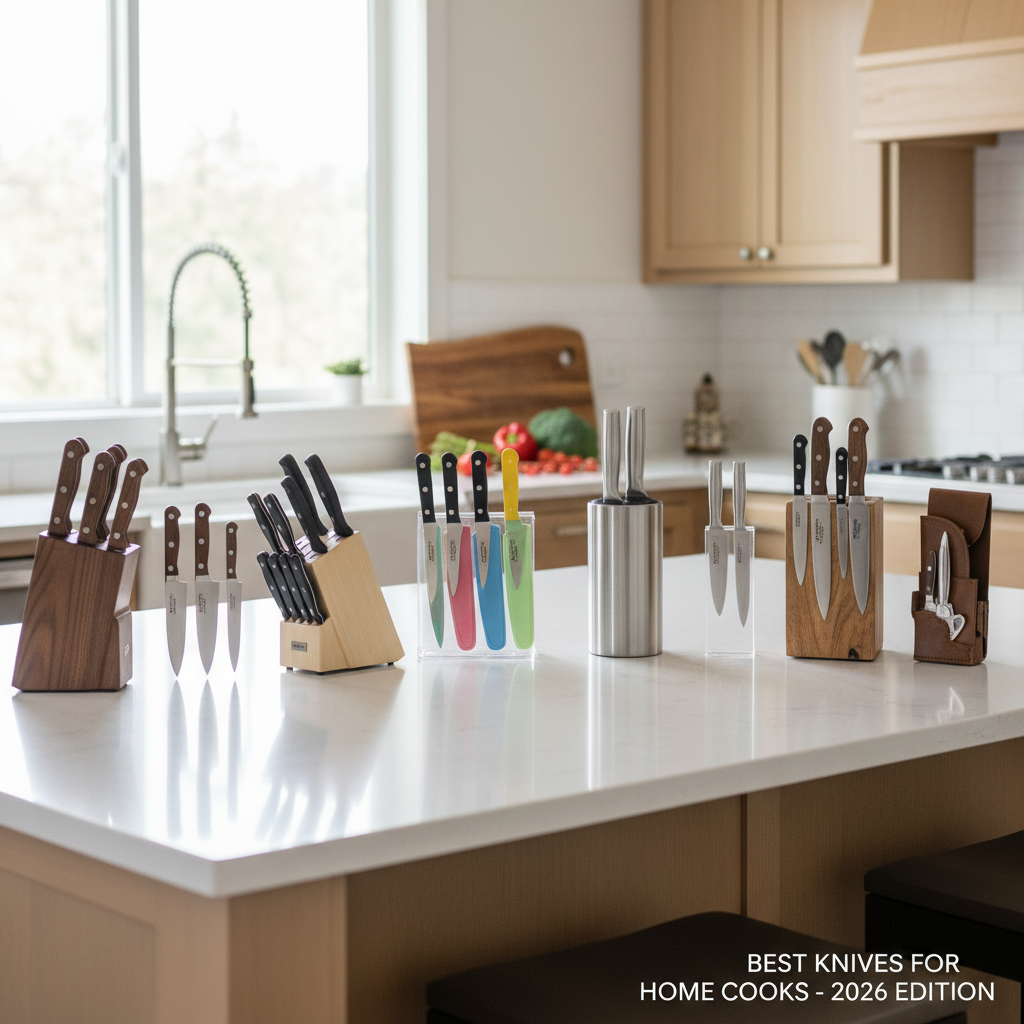
Choosing the right kitchen knives is essential for home cooks. The best kitchen knives make cooking easier, safer, and more fun. This guide helps you pick the perfect set, explains different knife types, provides step-by-step advice, and answers common questions. Whether you’re cooking for yourself or your family, this article will teach you everything you need to know about kitchen knives.
Quick Picks – Top Kitchen Knives for Home Cooks in 2024
Best Overall Kitchen Knife
The chef’s knife is the most versatile and widely used kitchen knife. It can chop, slice, and dice almost anything. A top-rated chef’s knife, like the Victorinox Fibrox Pro Chef’s Knife, offers excellent balance and sharpness for most tasks.
Best Value Kitchen Knife
If you want quality without spending too much, the Mercer Culinary Millennia Chef’s Knife is a great choice. It is affordable, durable, and perfect for everyday cooking.
Best Beginner-Friendly Kitchen Knife
The Wüsthof Gourmet Chef’s Knife is easy for beginners to use. It has a comfortable handle, a sharp blade, and is lightweight. This knife helps new home cooks develop their skills safely.
Types of Kitchen Knives Every Home Cook Should Own
Essential Kitchen Knives Explained
- Chef’s Knife: All-purpose knife for chopping, slicing, and dicing.
- Paring Knife: Small knife for peeling and detailed work.
- Serrated Bread Knife: Cuts bread, tomatoes, and foods with tough skin.
- Utility Knife: Smaller than a chef’s knife for simple tasks.
Specialty Knives for Advanced Home Cooks
- Boning Knife: Removes bones from meat and fish.
- Santoku Knife: Ideal for fine slicing and chopping.
- Carving Knife: Used for slicing cooked meat.
- Cleaver: Cuts through bones and thick vegetables.
How to Choose the Best Kitchen Knives for Your Needs
Key Features to Consider When Buying Kitchen Knives
- Sharpness: A sharp blade is safer and easier to use.
- Balance: The knife should feel balanced in your hand.
- Weight: Pick a knife weight that feels comfortable.
- Size: Chef’s knives are usually 8 inches; smaller knives are easier for detail work.
Blade Materials and Construction
- Stainless Steel: Easy to clean and resists rust.
- High-Carbon Steel: Stays sharp longer but may need more care.
- Ceramic: Very sharp and lightweight, but fragile.
- Forged vs. Stamped: Forged knives are stronger and last longer. Stamped knives are lighter and affordable.
Handle Design and Ergonomics
- Grip: Look for non-slip, comfortable handles.
- Shape: Curved handles fit your hand better and reduce fatigue.
- Material: Plastic, wood, or composite handles each have pros and cons; choose what feels best.
Testing and Reviewing Kitchen Knives: What Matters Most
Performance Criteria for Kitchen Knives
- Cutting Ability: How easily the knife slices, chops, and dices various foods.
- Comfort: Does the knife feel good and safe during extended use?
- Versatility: Can it handle different tasks?
Durability and Maintenance
- Blade Retention: Does the knife stay sharp after many uses?
- Ease of Cleaning: Dishwasher safe or hand-wash only?
- Handle Wear: Durable handles last longer; avoid handles that crack or break easily.
How to Maintain and Sharpen Your Kitchen Knives
Knife Care Tips for Home Cooks
- Wash knives by hand with mild soap and dry thoroughly.
- Store knives in a block, on a magnetic strip, or with blade guards.
- Avoid cutting on stone or glass; use a wooden or plastic cutting board.
- Keep knives away from the dishwasher to prevent damage.
Sharpening Techniques and Tools
- Honing Rod: Keeps the blade straight and sharp. Use weekly.
- Sharpening Stone: Restores the blade edge. Use every few months.
- Knife Sharpener: Electric or manual devices for quick sharpening.
- Steps to Sharpen a Knife:
- Secure the sharpening tool on a stable surface.
- Hold the knife at the correct angle (usually 20 degrees).
- Slide the blade across the stone or sharpener from heel to tip.
- Repeat the process for both sides of the blade.
- Wipe the blade carefully and check for sharpness.
FAQ: Common Questions About Kitchen Knives for Home Cooks
| Question | Answer |
|---|---|
| Which kitchen knife should I buy first? | A chef’s knife is the best starter for most home cooks. |
| How often should I sharpen my knives? | Hone weekly, sharpen every few months depending on use. |
| Can I put my knives in the dishwasher? | No. Hand washing keeps them sharp and prevents damage. |
| What is the safest way to store kitchen knives? | Use a knife block, magnetic strip, or blade guards. |
| How do I choose the right knife handle? | Try different materials; make sure the handle fits your hand comfortably. |
Preparation: Tools and Materials Needed
- Chef’s knife
- Paring knife
- Bread knife
- Cutting board (wood or plastic)
- Honing rod or sharpening stone
- Knife block or magnetic strip
Step-by-Step Tutorial: Using Your Kitchen Knives
-
Step 1: Setting Up Your Workspace
Gather all your knives, cutting board, and sharpening tools. Make sure your workspace is clean and well lit.
-
Step 2: Holding the Knife Properly
Grip the handle firmly, with fingers wrapped around, and thumb resting on the side of the blade. This gives you control and balance.
-
Step 3: Basic Cutting Techniques
- Slicing: Move the knife in a smooth motion from heel to tip.
- Chopping: Use a downward motion, keeping the tip in contact with the board.
- Dicing: Cut food into even cubes by first slicing, then chopping.
- Peeling: Use the paring knife for small, precise tasks.
-
Step 4: Knife Maintenance After Use
Wash knives by hand and dry them. Store knives safely and hone them regularly to keep sharp.
-
Step 5: Sharpening Your Knife
- Use a honing rod weekly to keep the blade edge straight.
- Sharpen with a stone or sharpener every few months.
- Follow the sharpening steps listed above for best results.
Common Problems and Solutions
- Dull Blade: Sharpen using a stone or sharpener.
- Rust Spots: Clean thoroughly and dry after washing.
- Uncomfortable Grip: Try different handle materials or knife models.
- Chipping: Avoid cutting hard materials or using ceramic knives for tough jobs.
Advanced Tips to Optimize Your Kitchen Knife Use
- Try rocking the blade for smoother slicing.
- Practice cutting different foods to improve technique.
- Keep knives sharp for safer, faster cooking.
- Rotate knives for different tasks to prevent fatigue.
- Upgrade to specialty knives as your skills advance.
Summary: Key Takeaways and Next Steps
The best kitchen knives for home cooks should be sharp, comfortable, and suited to your cooking needs. Start with a chef’s knife, learn basic techniques, and care for your knives to keep them lasting longer. Expand your collection as you cook more often. Choose knives wisely, maintain them, and enjoy easier, safer cooking every day. For your next step, practice what you learned with simple recipes and keep sharpening your skills!