

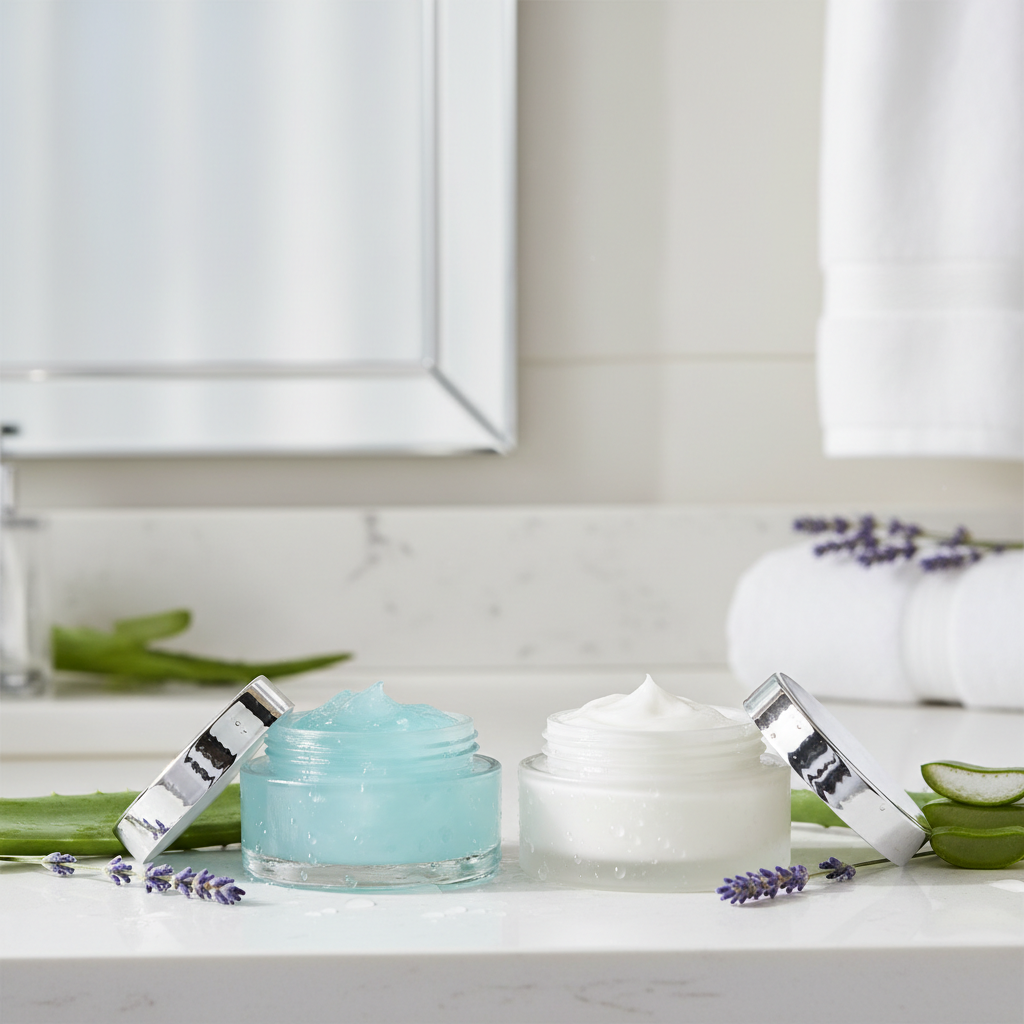
Understanding Gel Moisturizers and Cream Moisturizers
What Is a Gel Moisturizer?
Gel moisturizers are lightweight, water-based skincare products. They often have a clear appearance and a cool, bouncy texture. Gels absorb quickly into the skin without leaving a greasy residue. They’re popular among people who want a hydrating but non-sticky feel.
What Is a Cream Moisturizer?
Cream moisturizers are thicker, opaque products. They’re typically oil-based or contain richer emollients. Creams spread smoothly and create a protective barrier, locking in moisture. People with dry or sensitive skin especially like them for their soothing and nourishing properties.
Key Differences Between Gel and Cream Moisturizers
- Texture: Gels are light and refreshing, while creams are thicker and richer.
- Ingredients: Gels are mainly water-based; creams often contain more oils and butters.
- Absorption: Gels absorb rapidly without greasy residue. Creams absorb more slowly and may feel heavier.
- Finish: Gels leave a matte or natural finish. Creams leave a dewy or slightly shiny look.
- Best for: Gels suit oily/combination skin. Creams are great for dry/sensitive skin.
Skin Types: How to Choose Between Gel and Cream Moisturizer
Gel Moisturizer for Oily and Acne-Prone Skin
If you have oily or acne-prone skin, gel moisturizers are excellent. They hydrate without clogging pores or adding extra oil. The fast-absorbing formula helps reduce shine and prevents breakouts. People with teenage or combination skin also benefit from gels.
Cream Moisturizer for Dry and Sensitive Skin
Dry or sensitive skin needs more moisture and protection. Cream moisturizers offer rich hydration that lasts longer. They soothe and repair the skin barrier, reducing irritation and flakiness. These creams are perfect for winter or dry climates too.
Combination and Normal Skin: Which to Use?
People with combination skin can use both types. For oilier areas like the T-zone, apply a gel moisturizer. For drier areas, use a cream moisturizer. Normal skin types can choose based on personal texture preference and seasonal needs.
Ingredient Deep Dive: Gel vs Cream Moisturizers
Common Ingredients in Gel Moisturizers
- Water
- Glycerin
- Hyaluronic Acid
- Aloe Vera
- Plant Extracts (like green tea, cucumber)
Common Ingredients in Cream Moisturizers
- Oils (jojoba, almond, coconut)
- Shea Butter or Cocoa Butter
- Ceramides
- Fatty Acids
- Humectants (like glycerin)
Ingredient Safety and Allergens
- Check for fragrance-free options if you have sensitive skin.
- Test on a small patch before full use to avoid allergic reactions.
- Common allergens: fragrance, some plant extracts, essential oils.
Application & Effectiveness: Step-by-Step How-To
How to Test and Apply Gel Moisturizer Properly
- Wash your face with a gentle cleanser and pat dry.
- Apply a small amount of gel moisturizer to your face and neck, avoiding the eye area.
- Use gentle, upward strokes until the gel is fully absorbed.
- If trying for the first time, patch test on the inner arm 24 hours before face use.
How to Test and Apply Cream Moisturizer Properly
- Cleanse your face thoroughly and pat dry.
- Take a pea-sized amount of cream moisturizer.
- Dot the cream on cheeks, forehead, nose, and chin.
- Massage evenly and gently until absorbed.
- Patch test on a small area if using a new product.
Layering Moisturizers: Can You Use Both?
Yes, you can layer both moisturizers. Start with the gel for lightweight hydration, then apply cream on the driest areas or where you need extra nourishment. This is helpful during seasonal changes or if your skin has mixed needs.
Pros and Cons: Gel Moisturizer vs Cream Moisturizer
Advantages and Disadvantages of Gel Moisturizers
- Advantages: Light, fast-absorbing, ideal for oily skin, cools the skin, usually non-comedogenic.
- Disadvantages: May not provide enough moisture for very dry skin, sometimes contains more preservatives.
Advantages and Disadvantages of Cream Moisturizers
- Advantages: Deeply hydrating, protective, suitable for dry/sensitive skin, improves skin barrier.
- Disadvantages: Can feel heavy, may clog pores if used on oily skin, sometimes leaves a shiny finish.
Expert Dermatologist Insights for 2026
Latest Trends in Moisturizer Formulations
- More products with skin-barrier-supporting ingredients like ceramides and peptides.
- Advancements in non-comedogenic yet rich moisturizers.
- Hybrid gel-cream textures for customizable benefits.
- Greater focus on clean and hypoallergenic ingredients.
Dermatologist Tips for Choosing the Right Moisturizer
- Know your skin type before choosing a product.
- Check labels for non-comedogenic or hypoallergenic if prone to breakouts or allergies.
- Adjust your moisturizer type with the seasons (gel for summer, cream for winter).
- Always patch test a new product.
- If unsure, consult a dermatologist for personalized advice.
FAQ: Gel vs Cream Moisturizer Common Questions Answered
- Q: Can I use gel moisturizer every day?
A: Yes, gels are safe for daily use, especially for oily or acne-prone skin. - Q: Are creams too heavy for young people?
A: Not always. Some lightweight creams can work for teens, especially in dry weather. - Q: Will a gel moisturizer hydrate enough during winter?
A: For many, a cream works better when the air is cold and dry, but some hydrating gels might also be enough in mild winters. - Q: Can I switch between gel and cream based on the season?
A: Yes! It’s smart to change your moisturizer as your skin’s needs shift.
Final Verdict: How to Decide Which Moisturizer Is Better for You in 2026
Choosing between a gel moisturizer and a cream moisturizer comes down to your skin type, climate, and preferences. Gels are excellent for oily and acne-prone skin because they hydrate without adding oil. Creams are best for dry or sensitive skin due to their deeply nourishing properties. Many people find success using both—gel in the morning and cream at night, or mixing as the seasons change.
Remember to check ingredients, patch test, and listen to your skin. If uncertain, ask a dermatologist. With the right moisturizer, your skin can feel healthy and look its best in 2026 and beyond.